
Boating accident on the Lake Worth Lagoon, the Intracoastal or Jupiter Inlet: reporting duties and injury claims
Florida law requires a boat operator involved in a collision or accident to give reasonable assistance, provide their name, address and vessel identification in writing to injured people and property owners, and report the accident without delay to the Fish and Wildlife Conservation Commission, the sheriff or local police if anyone was hurt beyond first aid, died or disappeared, or damage reached $2,000 (Fla. Stat. § 327.30). Leaving the scene of an accident with injuries is a felony. Injured people can bring negligence claims against careless operators and owners, but auto PIP does not cover boating injuries.
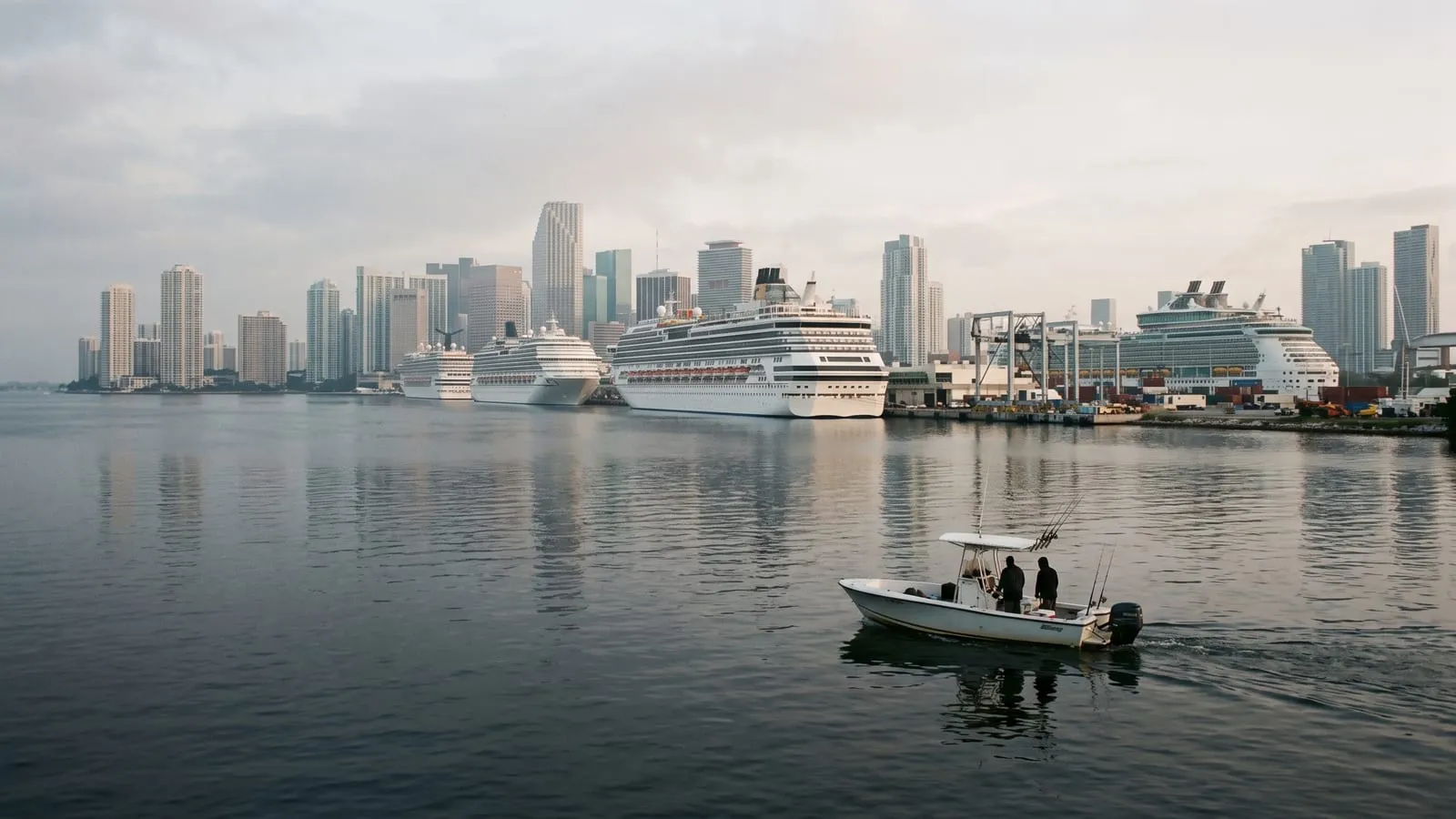
Palm Beach County’s busiest water is narrow and crowded. On a sunny weekend the Lake Worth Lagoon fills with center consoles heading for the sandbar at Peanut Island, personal watercraft cutting across wakes, paddleboarders near the shoreline, and larger boats lining up for the Lake Worth Inlet. Up north, the Jupiter Inlet and the Intracoastal near the Jupiter Lighthouse draw the same mix. When two of them meet at speed, the injuries resemble a car crash, but the rules that follow are not the ones most people know.
What does Florida law require right after a boat collision?
Chapter 327 of the Florida Statutes sets out the operator’s duties. Under Fla. Stat. § 327.30(1), an operator involved in a collision, accident or other casualty must:
- give reasonable assistance to anyone affected, as long as doing so does not seriously endanger their own vessel, crew or passengers
- give their name, address and vessel identification in writing to any injured person and to the owner of damaged property
- if an unattended vessel was hit, make a reasonable effort to find and notify its owner
Section 327.30(2) adds a reporting duty. The accident must be reported without delay, by the quickest means available, to the Florida Fish and Wildlife Conservation Commission, the county sheriff, or the local police chief, if any of the following happened:
| Reportable event | Reporting threshold |
|---|---|
| Personal injury | Requires medical treatment beyond immediate first aid |
| Death or disappearance | Any death, or a person missing under circumstances suggesting death or injury |
| Property damage | Apparent damage of at least $2,000 to vessels or other property |
| Vessel casualty | Capsizing, sinking, or a collision with another vessel or object |
Separately, a written accident report is required for injury, death, disappearance or $2,000 in damage (Fla. Stat. § 327.301), on the federal schedule in 33 C.F.R. § 173.55: within 48 hours if someone dies within 24 hours or needs treatment beyond first aid, and within 10 days otherwise. In an emergency, call 911 or raise the U.S. Coast Guard on VHF channel 16.
What happens to an operator who leaves?
Leaving the scene without giving aid and notifying law enforcement is unlawful under § 327.30(5). It is a misdemeanor when only property is damaged, and a felony when someone is injured, with harsher penalties for serious injury or death. If a boat strikes you and leaves, note anything you can: hull color, registration numbers on the bow, the boat’s name on the transom, the engines, and the direction it went. Marinas, fuel docks and waterfront homes along the lagoon sometimes have cameras pointed at the water.
Who investigates a boating accident in Palm Beach County?
The FWC’s Division of Law Enforcement investigates many serious boating accidents. The Palm Beach County Sheriff’s Office has a marine unit, and some cities have their own marine patrols. The Coast Guard, which operates Station Lake Worth Inlet, often responds to emergencies near the inlets.
One important point: reports and statements given by the people involved for the accident report may not be used as evidence in any civil or criminal trial (Fla. Stat. § 327.301). Breath, blood and urine test results are an exception, and so is an officer’s own observation. That means the injury case has to be built from independent evidence, such as witness accounts, photos and video, GPS or chartplotter data from the boats, and damage patterns.
Who can be responsible for a boating injury?
Responsibility can fall on several people at once:
- The operator, for careless or reckless operation (Fla. Stat. § 327.33), operating under the influence (Fla. Stat. § 327.35), excessive speed in congested water, ignoring idle-speed or no-wake zones, or failing to keep a proper lookout.
- The owner, who may be responsible for letting an inexperienced or impaired person operate the boat. Operators born on or after January 1, 1988 need boating safety education documentation to run a boat with a motor of 10 horsepower or more (Fla. Stat. § 327.395).
- A rental business, which must give renters pre-rental instruction and carry insurance of at least $500,000 per person and $1 million per event (Fla. Stat. § 327.54). Jet ski and boat rentals near the inlets are common, and these requirements matter when a renter causes a crash.
- A charter or tour company, which is responsible for its captain and crew.
Fault is divided among everyone whose negligence contributed, and an injured person found more than 50 percent at fault recovers nothing under Florida’s comparative fault statute (Fla. Stat. § 768.81(6)), though different rules can apply if federal maritime law governs.
Who pays the medical bills?
Not your car insurance. Florida PIP covers injuries involving motor vehicles designed for highway use, so it does not apply to a boating accident. Health insurance usually pays first. The injury claim against the responsible operator or owner then covers the rest, typically through a boat insurance policy, a homeowner’s or umbrella policy, or a rental company’s required coverage. Florida does not require liability insurance for most private recreational boats, so identifying every available policy early is part of the work.
Does federal maritime law apply on the lagoon and the inlets?
It can. The Lake Worth Lagoon, the Intracoastal Waterway and the inlets are navigable waters, and accidents there may fall under federal admiralty jurisdiction. When maritime law applies, it can change the deadline to sue, how fault is divided, and what damages are available. Boat owners sometimes file a federal action under the Limitation of Liability Act, 46 U.S.C. chapter 305, to try to cap their exposure at the value of the vessel, and that statute has its own short time limits after the owner receives written notice of a claim.
Because Florida’s two-year negligence deadline (Fla. Stat. § 95.11(5)(a)) and the maritime rules can differ, the safest approach is to treat the shorter deadline as the real one until a lawyer has looked at the facts.
Contact our West Palm Beach office
Wolfson & Leon has represented injured people since 1963, including people hurt on the water. If you were injured in a boating accident on the Lake Worth Lagoon, the Intracoastal, Jupiter Inlet or Lake Okeechobee, call 561-782-1585 to schedule an appointment at our West Palm Beach office. Consultations are free, in English or Spanish. We work on a contingency fee explained in writing before you sign, and the firm advances the costs of the case.
Key facts
- Accidents involving injury needing more than first aid, death, disappearance, or at least $2,000 in damage must be reported without delay by the quickest means available to FWC, the sheriff or the municipal police. Source: Fla. Stat. § 327.30(2)
- A written accident report is also required, within 48 hours for death within 24 hours or injury requiring treatment beyond first aid, and within 10 days for other reportable accidents. Source: Fla. Stat. § 327.301; 33 C.F.R. § 173.55
- Operators born on or after January 1, 1988 need boating safety education documentation to operate a vessel with a motor of 10 horsepower or more. Source: Fla. Stat. § 327.395(1)
- Boat rental liveries must carry insurance of at least $500,000 per person and $1 million per event, and must give pre-rental instruction. Source: Fla. Stat. § 327.54
Frequently asked questions
Can the boat operator's accident report be used against them in my case?
Generally no. Under Fla. Stat. § 327.301, reports and statements made by the people involved for the accident report may not be used as evidence in a civil or criminal trial, though breath, blood and urine test results are an exception. Your case is built from other evidence: witnesses, photos, GPS data and the officers' own observations.
I was a guest on a friend's boat. Can I make a claim?
Yes, if the operator or owner was negligent. Many recreational boats carry liability insurance even though Florida does not require it for private boats, and homeowner or umbrella policies sometimes apply. The claim is against the insurance, and the details depend on the policies involved.
Does my car insurance PIP cover a boating injury?
No. Florida's PIP law applies to motor vehicles designed for highway use, not to vessels. Medical bills from a boating accident are usually paid by health insurance first, with the injury claim covering the rest.
This article describes Florida law in general terms for people in Palm Beach County. It is not legal advice about your situation, and reading it or contacting us does not create an attorney-client relationship with Wolfson & Leon. Results in past cases do not predict or promise the result in any other case.