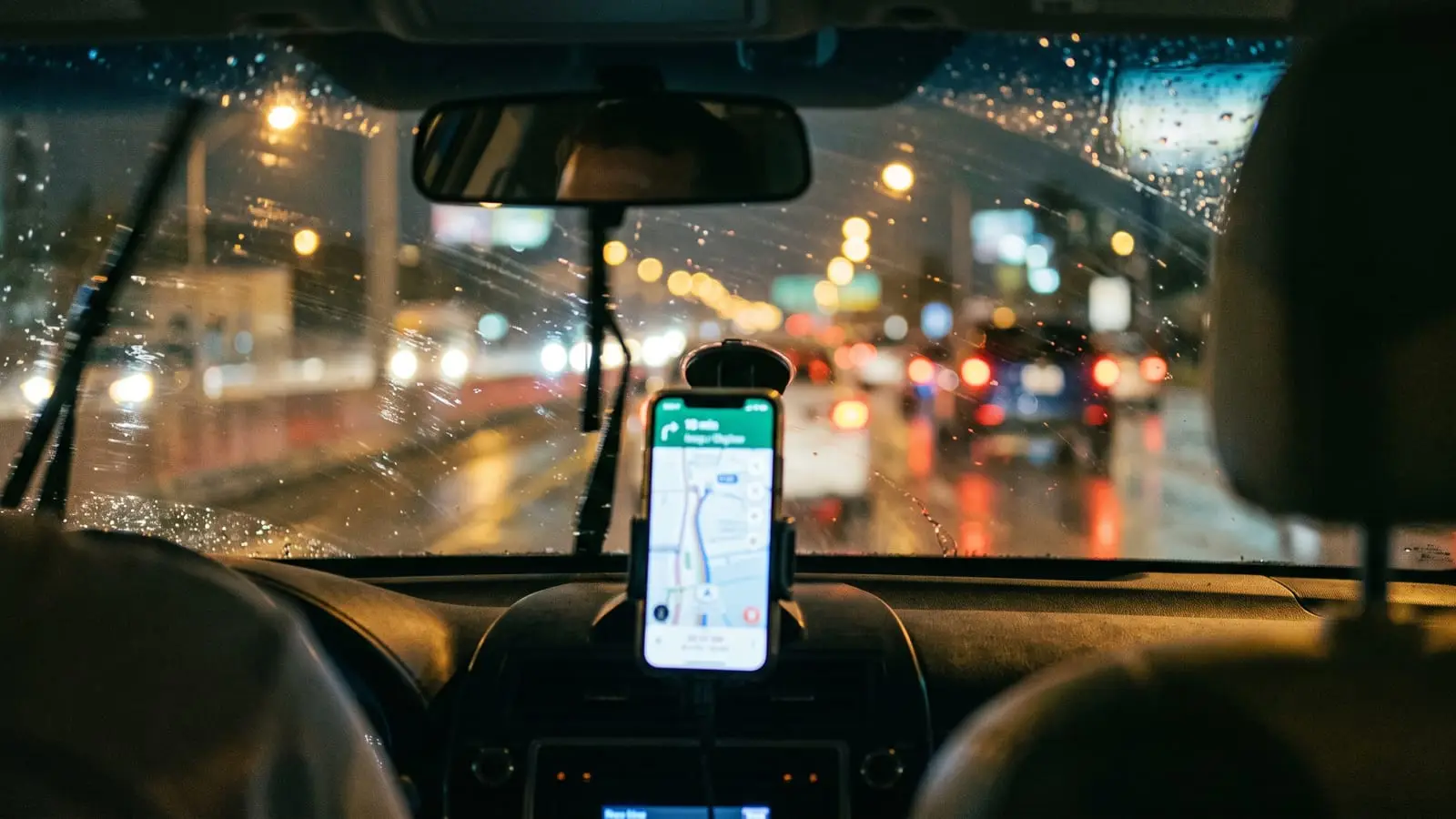
I got hurt in an Uber or Lyft in West Palm Beach. Which insurance policy covers me?
The insurance that covers you after an Uber or Lyft crash depends on the driver's app status when it happened: under Fla. Stat. § 627.748, the rideshare company must provide $1,000,000 in liability coverage from the moment a ride is accepted until the passenger is dropped off. If the driver was logged in and waiting for a request, the required coverage is $50,000 per person and $100,000 per crash for bodily injury, and with the app off only the driver's personal policy applies. The app's trip data is what proves which of those periods you were in.
Wolfson & Leon has represented injured people since 1963 and takes rideshare cases for passengers, other drivers, pedestrians, cyclists and the rideshare drivers themselves. The consultation is free, in English or Spanish. The firm charges a contingency fee, puts the percentage in writing before you sign, and advances the costs of the case. For an appointment at the West Palm Beach office, call 561-782-1585.
How does Florida divide a rideshare driver's time for insurance purposes?
Fla. Stat. § 627.748(7) splits the driver's time into three stages, each with its own minimum coverage:
- Logged out of the app. The driver is a private motorist, and only their personal auto policy applies, the same as for any other driver.
- Logged in, waiting for a request. Either the company or the driver must carry at least $50,000 per person and $100,000 per crash in bodily injury coverage, plus $25,000 for property damage.
- From ride acceptance to drop-off. The company must provide $1,000,000 in liability coverage along with PIP and uninsured motorist coverage.
If I was the passenger, do I need to prove who caused the crash?
Passengers are rarely at fault, so the real question is which driver caused the crash: your rideshare driver, another motorist, or both. Because you were on an active trip, the $1,000,000 policy is available if your driver was responsible, and the rideshare company's uninsured motorist coverage may help if the crash was the other motorist's fault and that motorist was underinsured. Medical bills still start with PIP: your own if you have a car, or, if no one in your household has PIP, the rideshare vehicle's (Fla. Stat. § 627.736(4)(e)).
I drive for Uber or Lyft and another car hit me. What are my options?
You can bring a claim against the driver who hit you, and during an accepted trip the rideshare company's uninsured motorist coverage may apply if that driver had no insurance or too little. Be careful with your own auto insurer: many personal policies exclude driving for a rideshare company unless you added a rideshare endorsement, and an insurer that learns you were working may deny the claim or cancel the policy. The firm reviews the app's trip records and both policies before anyone talks to an adjuster.
What proof decides a rideshare injury claim?
The most important record is the app's trip log, which time-stamps when the driver logged in, accepted the request, picked you up and ended the ride. That record decides which insurance tier applies. Take screenshots of your receipt and route map the same day. Uber and Lyft keep this data, but they do not simply hand it to an injured rider who asks; a lawyer requests it formally. Police reports, photos, medical records and witness names matter here just as they do after any crash.
Where do rideshare crashes happen around West Palm Beach?
Wherever rides begin and end. In West Palm Beach that means the dining and nightlife blocks on Clematis Street and around The Square, the downtown Brightline station, the pickup and drop-off curbs at Palm Beach International Airport (PBIA), and events at the Kravis Center and the Palm Beach County Convention Center. Elsewhere in the county, rides bunch up around Atlantic Avenue in Delray Beach, Town Center at Boca Raton, The Gardens Mall, and game days at Roger Dean Chevrolet Stadium in Jupiter.
Drivers glancing at their phones for the next request, abrupt stops to pick someone up, and passengers opening doors into traffic are typical ways these crashes start. Pinning down the exact spot also tells us which agency wrote the report, whether that was West Palm Beach Police, PBSO or a city department such as Delray Beach or Boca Raton.
What compensation is available after an Uber or Lyft crash?
Whether you were a passenger, in another car, on foot, or driving for the app, you can claim medical bills and lost wages, plus pain and suffering if the injury is permanent. Which policy pays depends on the rideshare driver's status at the time (Fla. Stat. § 627.748): the $1,000,000 coverage during a trip, the lower limits while the app was on with no ride, or the personal policy with the app off. PIP covers the first medical bills. If someone other than the rideshare driver caused the crash, that person's bodily injury coverage and the rideshare company's uninsured motorist coverage come into play. Because the trip data controls which coverage is available, the firm requests it in every rideshare case.
What should I avoid after a rideshare crash?
- Letting the trip record disappear from your phone. Screenshot the receipt and route on the day of the crash; it is your proof you were on a ride.
- Giving the rideshare company's claims administrator a detailed account. Confirming the trip is fine, and the rest can wait for your lawyer.
- If you were the driver, calling your personal insurer before you understand its rideshare exclusion. The wrong report can lead to a denied claim or a canceled policy.
- Skipping a police report or an in-app report because the driver asked you to keep things informal.
- Expecting Uber or Lyft to take care of it for you. The companies meet their obligations through insurance carriers, and those carriers weigh your claim the way any insurer would.
Key facts
- From ride acceptance through drop-off, Uber and Lyft must provide $1,000,000 in liability coverage. Source: Fla. Stat. § 627.748(7)(c)
- With the app on and no ride accepted, the minimums are $50,000 per person and $100,000 per crash for bodily injury, and $25,000 for property damage. Source: Fla. Stat. § 627.748(7)(b)
- During an accepted ride, the rideshare company must also carry PIP and uninsured/underinsured motorist coverage. Source: Fla. Stat. § 627.748(7)(c)
- A rider with no car of their own generally gets PIP from the vehicle they were riding in. Source: Fla. Stat. § 627.736(4)(e)
- Negligence lawsuits over crashes on or after March 24, 2023 must be filed within two years. Source: Fla. Stat. § 95.11
Frequently asked questions
Uber's claims team messaged me about the crash. Should I reply?
Keep it brief. Confirming that the trip took place is fine, but a detailed account should wait until you have talked with a lawyer. Uber and Lyft route claims through third-party administrators, and whatever you write or say goes into the file used to evaluate your claim.
Can I sue Uber or Lyft itself?
In most cases the claim runs against the insurance the company is required to carry rather than the company directly, because Florida treats rideshare drivers as independent contractors. The $1,000,000 policy is normally the money that actually pays the claim. Whether a direct claim against the company exists depends on the facts, and the firm will look at that question in your case.
I was walking downtown and an Uber driver hit me. Am I covered by the company's policy?
If the driver had accepted a ride or was carrying a passenger, the $1,000,000 coverage extends to pedestrians and cyclists as well. If the app was on but the driver had no ride yet, the lower $50,000 / $100,000 limits apply. With the app off, you are dealing with the driver's personal policy.
How do I prove the driver was on a trip?
Through the app's trip and login records, which Uber and Lyft keep. A passenger's receipt helps; a pedestrian or another driver has no receipt, so the records have to be requested. Wolfson & Leon sends a formal request for them soon after it is retained.
The Uber I was riding in was hit by a driver with no insurance. Who pays?
During an accepted ride, the rideshare company must carry uninsured and underinsured motorist coverage (Fla. Stat. § 627.748(7)(c)), which can step in for the uninsured driver. PIP, yours or the rideshare vehicle's, still pays first for medical bills, and uninsured motorist coverage on your own household policies may also be available.
What happens when you call
Someone from the firm picks up
Dial 561-782-1585 day or night. A person answers, in Spanish if you like; if you call in the small hours, we take your details and an attorney calls you early the next morning.
A short conversation about what happened
About 15 minutes: the date and place, whether a doctor has seen you, whether police wrote a report, and whether any insurer has reached out. No documents needed.
A straight answer
If it is a case the firm can take, we explain the next step and what to avoid in the meantime. If it is not, we say so plainly and point you to where else to turn.
Nothing up front
The firm works on a contingency fee, a percentage explained in writing before you sign. Meetings in West Palm Beach are by appointment, and if you cannot travel, a visit at home or in the hospital can be arranged.