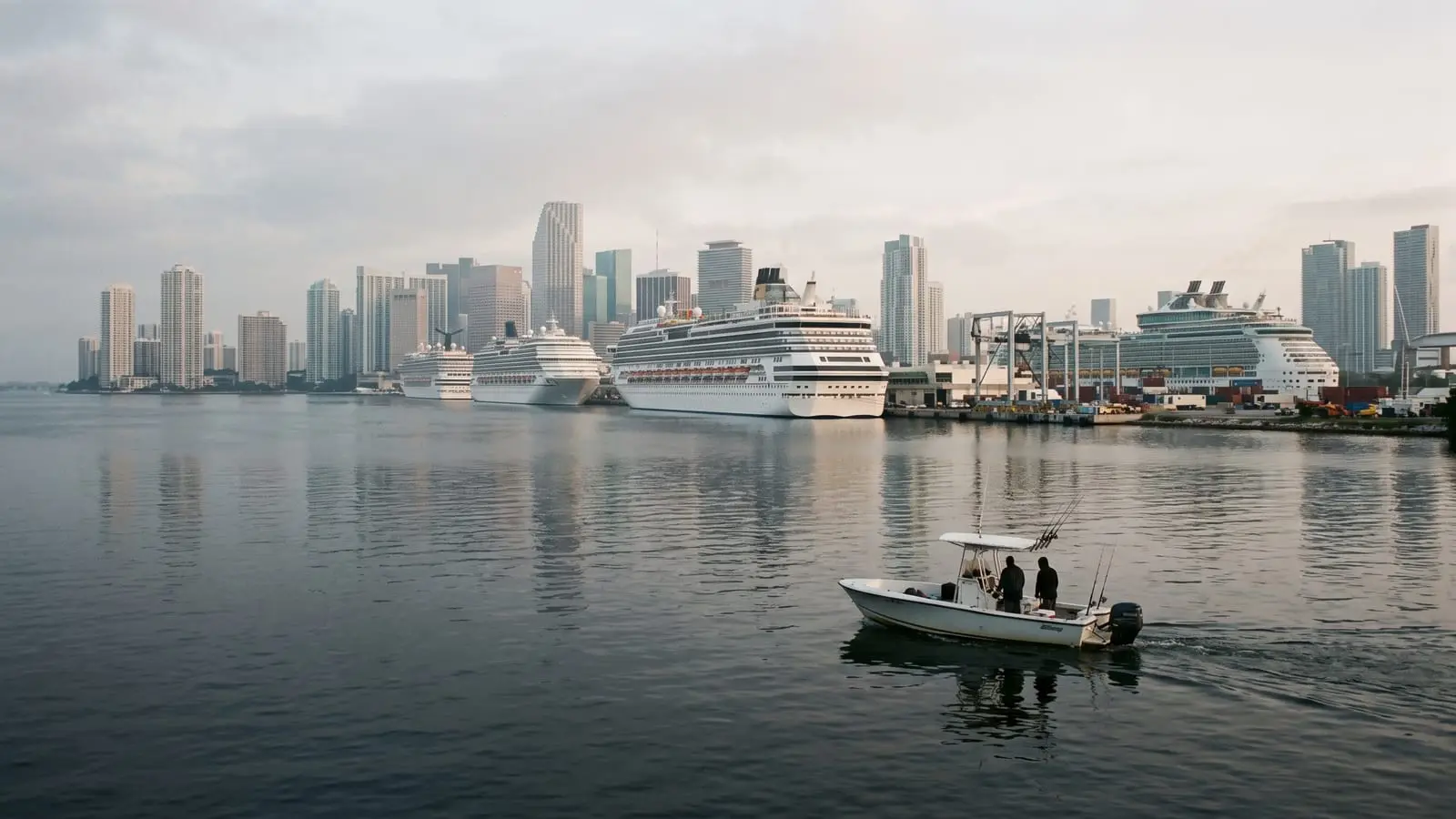
I got hurt on a cruise from the Port of Palm Beach or on a boat on the Intracoastal. Which law decides my claim?
Federal maritime law, not Florida's everyday injury rules, generally decides injuries on a cruise ship or on navigable water, and the deadlines run much faster. Under 46 U.S.C. § 30508 a cruise ticket can require written notice of your claim within 6 months and a lawsuit within 1 year, and the ticket also names the court where you must sue, so read your own ticket contract. A recreational boating injury on the Lake Worth Lagoon, the Intracoastal, or offshore is handled under general maritime law, with Florida's boating statutes (Fla. Stat. ch. 327) setting the rules of operation, and the federal deadline to sue is 3 years (46 U.S.C. § 30106).
Wolfson & Leon has represented injured people since 1963. You can have a free consultation in English or Spanish. The firm works on a contingency fee, explains the percentage in writing before you sign, and advances the costs of the case. To meet at the West Palm Beach office, which sees clients by appointment, call 561-782-1585.
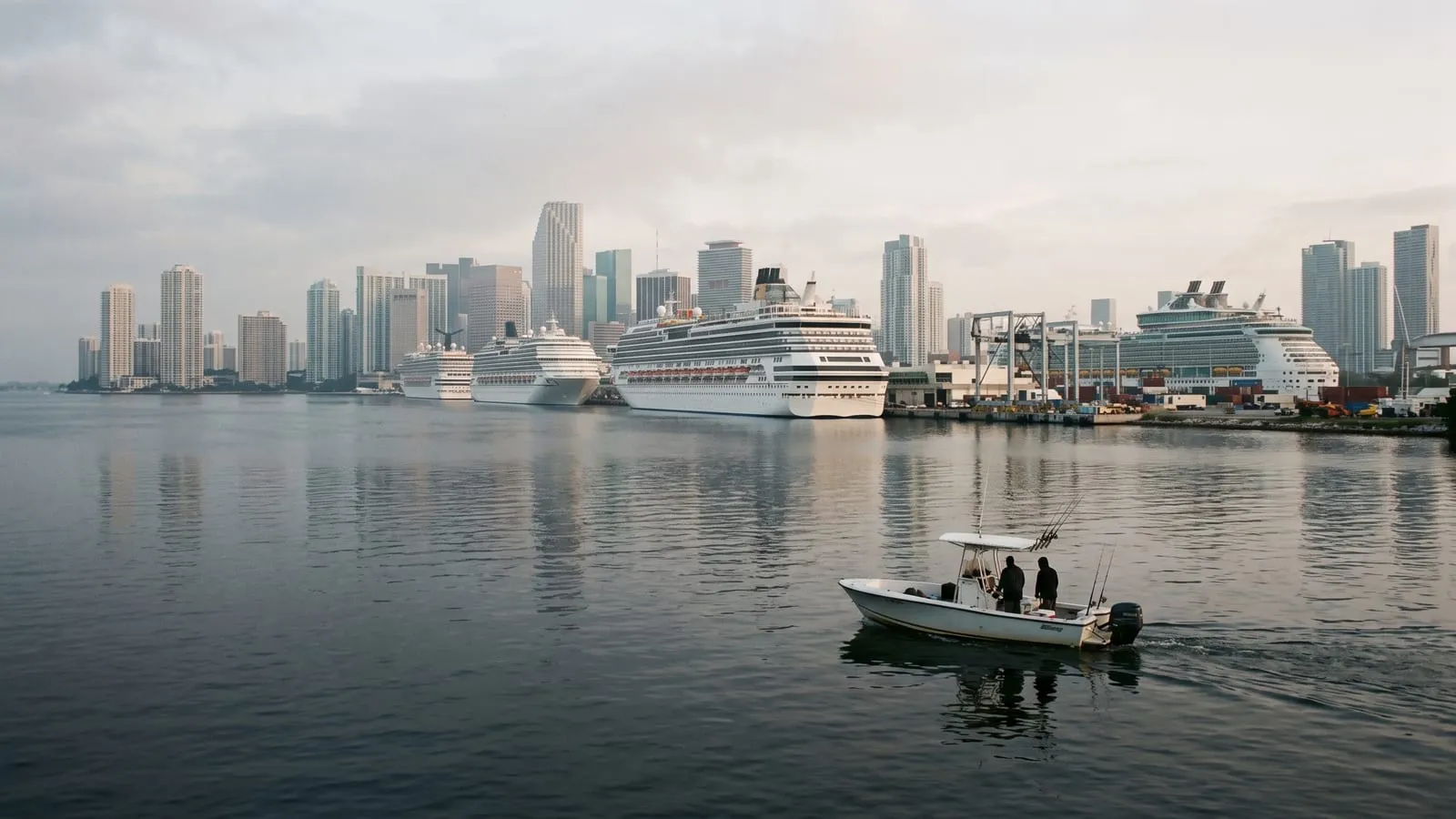
How long do I have after an injury on a cruise?
Your ticket contract sets the clock, so find it first: it is usually in your booking confirmation or online account. Federal law lets a cruise line require written notice of a claim within 6 months of the injury and a lawsuit within 1 year (46 U.S.C. § 30508). If the notice deadline passes, the line will argue the claim is barred however serious the injury is.
The ticket also decides where the case can be filed. Carnival, Royal Caribbean, Norwegian, MSC, and Virgin Voyages require injury suits in the U.S. District Court for the Southern District of Florida in Miami. The ship that sails from the Port of Palm Beach in Riviera Beach to Grand Bahama, and any other line, sets its own forum in its own ticket, and those terms can change from one sailing to the next. Many Palm Beach County residents also sail from PortMiami or Port Everglades; the same kinds of ticket limits apply there.
Which cruise injuries can support a claim against the line?
The cases that come up most are falls on wet pool decks, at buffet lines, and on stairs or raised door thresholds; injuries while boarding by gangway or tender; harm during a shore excursion the line sold or promoted; poor care in the ship's medical center; foodborne illness; and assaults where onboard security fell short.
Under federal maritime law a cruise line owes its passengers reasonable care under the circumstances. For a dangerous condition, you generally have to show the line knew or should have known about it, which makes onboard incident reports, maintenance records, and prior complaints about the same spot important evidence.
What rules apply to a boat crash on the Lake Worth Lagoon, near Peanut Island, or at an inlet?
The Lake Worth Lagoon, the Intracoastal Waterway, the inlets, and the ocean beyond them are navigable waters, so a collision or injury there is generally governed by federal maritime law. Florida's Chapter 327 supplies the rules of the road. No one may operate a vessel recklessly or carelessly (Fla. Stat. § 327.33). An accident involving injury, death, or more than $2,000 in damage must be reported (Fla. Stat. § 327.30). Anyone born on or after January 1, 1988 needs a boating safety education card to operate a boat of 10 horsepower or more (Fla. Stat. § 327.395). Personal watercraft operators must be at least 14 and wear a life jacket (Fla. Stat. § 327.39).
Locally, the risks cluster where boats crowd together: weekend crowds anchored off Peanut Island, traffic through the Lake Worth Inlet, and the Jupiter and Boynton inlets, where tide, wind, and passing boats all meet in a narrow channel. Rented jet skis and pontoon boats along the Intracoastal often carry people with little experience. Officers from the Florida Fish and Wildlife Conservation Commission (FWC), the sheriff's marine unit, or the Coast Guard may respond and write the report, and that report is usually the first document a claim is built on.
Who pays if I was hurt on a friend's boat or a rental?
Usually the insurance of the person running the boat and of the boat's owner, plus the operator and owner of any other vessel involved. Going out as a friend or a guest does not lower the care the operator owed you. When the boat or jet ski was rented, the rental business and its insurance may also be responsible, depending on what it did, such as how it maintained the craft or what instruction it gave.
Florida does not require boat owners to buy insurance, so the first job in many boating cases is finding out what coverage exists: a boat policy, a homeowner's policy that may extend to small boats, or a business policy. The general maritime deadline to sue is 3 years (46 U.S.C. § 30106).
What steps protect my claim after a cruise or boating injury?
- Report the injury to ship security, guest services, or the boat's operator, and ask for a copy of the report. On a cruise, insist that a written incident report be made; a visit to the ship's doctor is a separate record.
- Take photos of where it happened and of your injuries before anything is cleaned up or repaired.
- Collect witness names with cabin numbers or phone numbers before everyone leaves the ship or the dock.
- Save your ticket contract, boarding documents, and any excursion or rental receipts. The ticket controls the deadlines and the court.
- See your own doctor as soon as you are back on land. The ship's medical staff work for the cruise line.
- Talk to a lawyer well before the 6-month written notice deadline, not near the end of it.
What can I recover after being hurt on a cruise ship or a boat?
Maritime law lets an injured passenger recover medical costs, lost income, and pain and suffering caused by the cruise line's or the boat operator's negligence. There is no PIP and no permanent-injury threshold, so pain and suffering is not limited to permanent injuries. Large cruise lines carry substantial insurance, so a cruise claim usually turns on two things: proof that the line knew or should have known of the danger, and meeting the ticket's six-month notice and one-year filing deadlines. On a private boat, recovery depends on the insurance the operator and owner actually carry, and because Florida does not require boat insurance, tracking down every policy can matter as much as proving who was at fault.
What mistakes can sink a cruise or boating claim?
- Letting the six-month notice deadline in the ticket pass. A report filed with the ship's crew is not the written notice the ticket asks for.
- Assuming Florida's two-year rule applies. A cruise ticket can cut the time to one year and require filing in a specific federal court, often in Miami.
- Treating the ship's medical notes as your only record instead of seeing your own doctor once you are home.
- Accepting onboard credit or a future-cruise discount that comes with a release.
- Leaving the ship without witness contact information. Once passengers scatter, they are very hard to find.
- After a boat crash, skipping the report Fla. Stat. § 327.30 requires, or failing to identify every vessel, operator, and owner involved.
Key facts
- A cruise line may require written notice of an injury claim within 6 months and a lawsuit within 1 year. Source: 46 U.S.C. § 30508
- Major lines including Carnival, Royal Caribbean, Norwegian, and MSC require injury suits in the U.S. District Court for the Southern District of Florida in Miami; every ticket sets its own forum, so check yours. Source: Passenger ticket contracts (Carnival, RCL, NCL, MSC)
- General maritime personal injury claims must be filed within 3 years. Source: 46 U.S.C. § 30106
- A boating accident with injury, death, or more than $2,000 in damage must be reported. Source: Fla. Stat. § 327.30
- Reckless or careless operation of a vessel is prohibited. Source: Fla. Stat. § 327.33
- Operators born on or after January 1, 1988 must carry a boating safety education ID card. Source: Fla. Stat. § 327.395
Frequently asked questions
I was injured on a shore excursion in the Bahamas. Can I still bring a claim?
Often, yes, when the cruise line sold or promoted the excursion. Whether the line answers for the tour operator's negligence depends on the facts, and the claim is still subject to the ticket's notice and filing deadlines and its choice of court.
The cruise line offered me onboard credit or a discount on a future sailing. Should I accept?
Not before you understand your injury and your rights. If accepting comes with a release, it ends the claim. A consultation is free and the deadlines are short, so ask before you sign anything.
I was a guest on a friend's boat near Peanut Island when it crashed. Who is my claim against?
Usually the operator's and the owner's insurance, along with whoever was running any other boat involved. Your friendship with the operator does not change the duty of care, but because Florida does not require boat insurance, finding every available policy matters.
I work on a boat, as crew, a deckhand, or a charter mate, and got hurt on the job. Is that a different kind of case?
Yes. Someone who works aboard a vessel may have a Jones Act claim (46 U.S.C. § 30104), plus general maritime claims for maintenance and cure and for unseaworthiness. Those are separate from a passenger's claim. Wolfson & Leon can tell you on the call which rules apply.
Can a boating case be filed in Palm Beach County?
Often. Many maritime injury claims can be brought in state court, including the Fifteenth Judicial Circuit, or in federal court, such as the U.S. courthouse on Clematis Street in West Palm Beach, depending on the parties and the facts. Cruise cases are different: the court is usually fixed by the ticket.
What happens when you call
Someone from the firm picks up
Dial 561-782-1585 day or night. A person answers, in Spanish if you like; if you call in the small hours, we take your details and an attorney calls you early the next morning.
A short conversation about what happened
About 15 minutes: the date and place, whether a doctor has seen you, whether police wrote a report, and whether any insurer has reached out. No documents needed.
A straight answer
If it is a case the firm can take, we explain the next step and what to avoid in the meantime. If it is not, we say so plainly and point you to where else to turn.
Nothing up front
The firm works on a contingency fee, a percentage explained in writing before you sign. Meetings in West Palm Beach are by appointment, and if you cannot travel, a visit at home or in the hospital can be arranged.