
A driver with no insurance hit me in Palm Beach County. Who pays for my injuries?
When the at-fault driver carries no bodily injury coverage, or not enough, the money for your injuries beyond PIP usually comes from your own uninsured/underinsured motorist (UM/UIM) coverage. Florida requires insurers to include UM coverage in auto liability policies unless a named insured rejects it in writing on an approved form (Fla. Stat. § 627.727), so check your own policy and the policy of any relative you live with before assuming there is nothing. Most Florida drivers are only required to carry PIP and property damage liability (Fla. Stat. § 324.022, § 627.733), and the Insurance Research Council estimated that 20.6% of Florida motorists, roughly one in five, were uninsured in 2023.
Wolfson & Leon has represented injured people and families since 1963. The first consultation is free and can be in English or Spanish. The firm works on a contingency fee, with the percentage explained in writing before you sign, and it advances the costs of the case. The West Palm Beach office meets clients by appointment; call 561-782-1585.
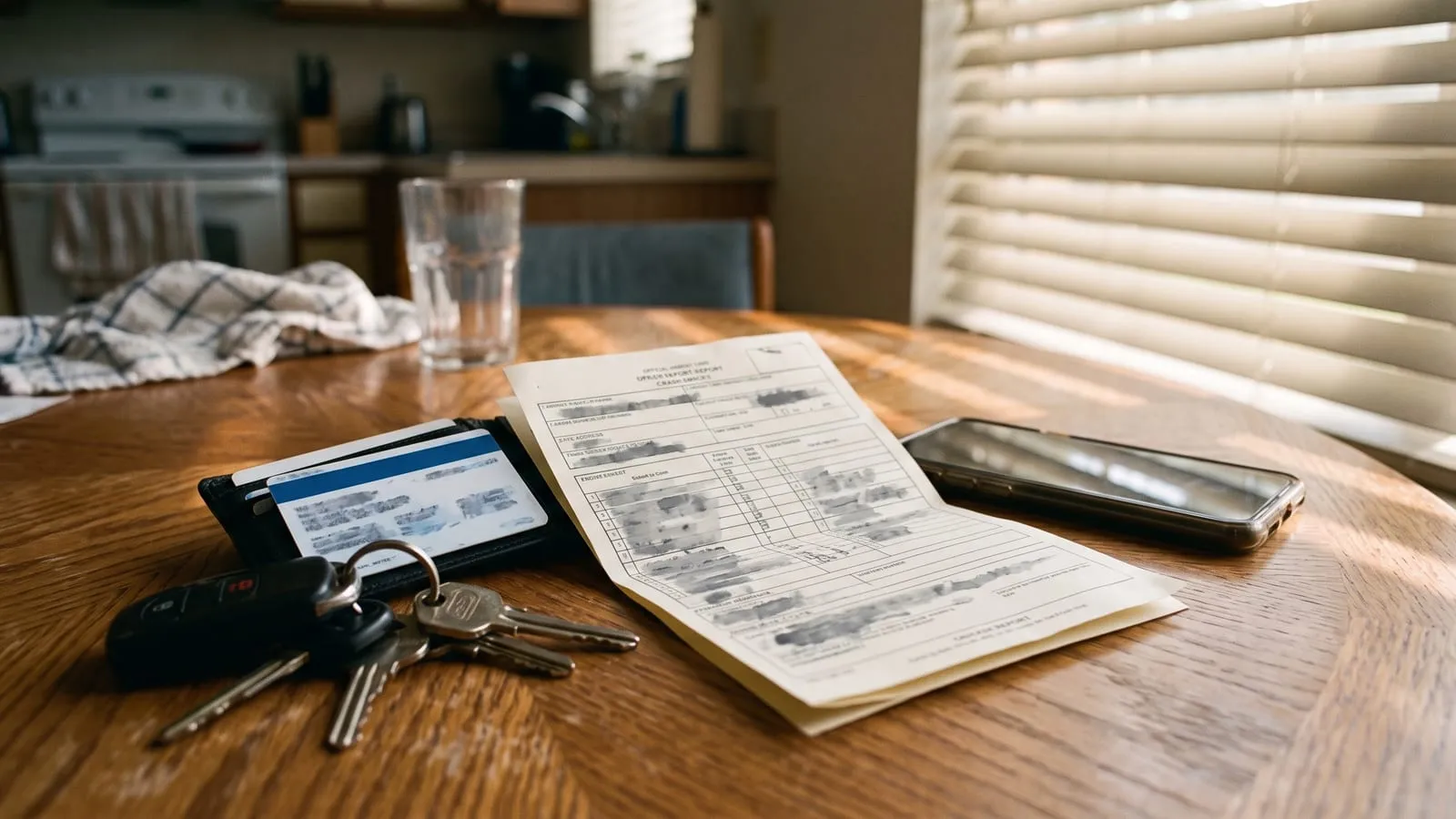
How does a UM claim work when I'm claiming against my own insurance company?
UM coverage stands in for the bodily injury insurance the at-fault driver should have had. UIM coverage, part of the same protection, fills the gap when that driver had a policy but its limits are smaller than your losses. Either way, the claim is made against your own insurer, and that changes the relationship: your company can raise every defense the at-fault driver could have raised, including whether your injury meets Florida's permanent-injury threshold for pain and suffering (Fla. Stat. § 627.737) and whether you share some of the fault.
Florida law also limits how your insurer can treat you afterward. It may not add a surcharge to your UM coverage solely because you were in an accident (Fla. Stat. § 626.9541(1)(o)10), and it may not surcharge or refuse to renew your liability, PIP, medical payments, or collision coverage solely because of an accident unless its file shows in good faith that you were substantially at fault (Fla. Stat. § 626.9541(1)(o)3.a).
Is my UM coverage stacked or non-stacked, and why does it matter?
Stacked coverage lets you add the UM limit for each vehicle on the policy together for one crash, and it generally covers you in any vehicle. Suppose you insure three cars with $25,000 of stacked UM on each: one crash can draw on $75,000. Non-stacked coverage pays a single limit and comes with more restrictions, such as not covering you in a vehicle you own that has no UM.
Stacked is the default in Florida. An insurer can sell the cheaper non-stacked form only if a named insured signs an office-approved form accepting those limits, and the non-stacked premium must be at least 20% lower (Fla. Stat. § 627.727(8)). Wolfson & Leon reads the declarations page alongside the signed selection forms; when the paperwork is missing or defective, the stacked limits are the ones that apply.
Will UM pay if a driver hit me on I-95 or the Turnpike and kept going?
In most Florida policies, yes: a driver who cannot be identified because they fled is handled as an uninsured motorist. The catch is proof. Call 911 from the scene if you can and make sure a crash report is written. On I-95 and Florida's Turnpike that is commonly the Florida Highway Patrol, whose Troop L covers Palm Beach County; on county roads such as Jog Road or Southern Boulevard west of the city it is often the Palm Beach County Sheriff's Office; inside West Palm Beach it is usually the West Palm Beach Police Department. Get the report or case number.
Many UM policies require a hit-and-run to be reported to police promptly, sometimes within 24 hours. Photos of the damage and the scene, names of witnesses, dash camera footage, and video from businesses along roads like Okeechobee Boulevard or Military Trail can confirm that another vehicle caused the crash.
Does my UM cover me if I was walking, on a bike, or riding in someone else's car?
Generally, yes. UM coverage protects the person, not just the vehicle. A pedestrian hit while crossing Clematis Street, a cyclist struck on Flagler Drive, or a passenger in a friend's car can usually claim under their own UM policy, or under the UM policy of a relative who lives in the same household. A passenger may also be covered by the UM on the car they were riding in, with their own coverage applying as excess.
When more than one policy could apply, the order in which they pay depends on the policy terms and Fla. Stat. § 627.727(8). Wolfson & Leon gathers every policy in the household before the claim is presented, because coverage people did not know they had often turns out to matter most.
What if I have no UM and the other driver has nothing?
Your PIP still pays up to $10,000 in benefits for medical care and lost income, and your health insurance can cover treatment beyond that. From there, Wolfson & Leon looks for anyone else who may be legally responsible: the owner of the car if someone else was driving it, under Florida's dangerous instrumentality doctrine; the driver's employer if the driver was on the job; and a bar or store that willfully and unlawfully served alcohol to someone under 21 or knowingly served a person habitually addicted to alcohol (Fla. Stat. § 768.125).
If none of those sources exist, the firm tells you so honestly instead of pursuing a claim that cannot be collected.
What does uninsured motorist coverage actually pay for?
Think of it as the bodily injury policy the other driver never bought. It covers medical bills beyond what PIP covers, lost income, and, if the injury is permanent under Fla. Stat. § 627.737, pain and suffering. The ceiling is your UM limit, multiplied by the number of insured vehicles when the coverage is stacked. Underinsured motorist coverage pays the difference between the at-fault driver's limits and your losses, up to your UIM limit.
Because your own insurer may raise any defense the other driver could have raised, a UM claim needs the same medical proof and fault evidence as any injury case. The only difference is who is on the other side of the table.
What mistakes can cost me my UM benefits?
- Waiting to report a hit-and-run. Many policies require a prompt police report, sometimes within 24 hours, and a late report gives the insurer a reason to doubt the crash.
- Accepting an underinsured driver's limits before notifying your UM insurer in writing under Fla. Stat. § 627.727(6); skipping that step can jeopardize the UM claim.
- Sitting for a recorded statement or an examination under oath with your insurer before you have a lawyer. Once you make a UM claim, your own company is the party you are negotiating against.
- Taking non-stacked at the insurer's word. Ask for the signed form; without a valid one, the coverage is stacked.
- Concluding you have no UM because you do not remember buying it. It is included unless someone rejected it in writing, so check every policy in the household.
Key facts
- UM coverage must be included in a Florida auto liability policy unless a named insured rejects it in writing on an approved form. Source: Fla. Stat. § 627.727(1)
- Non-stacked UM limits apply only if a named insured signs an approved form accepting them; the premium must be at least 20% lower. Source: Fla. Stat. § 627.727(8)
- Before accepting an underinsured driver's limits, the injured person must notify the UM insurer, which has 30 days to approve the settlement or pay the offered amount itself. Source: Fla. Stat. § 627.727(6)
- Most private Florida drivers must carry PIP and $10,000 of property damage liability, but not bodily injury liability. Source: Fla. Stat. § 324.022, § 627.733
- An estimated 20.6% of Florida motorists were uninsured in 2023, the seventh-highest rate in the country. Source: Insurance Research Council (2025 study), via Insurance Information Institute
- Florida's dangerous instrumentality doctrine can make a car's owner responsible when someone else drives it negligently. Source: Florida case law; see Fla. Stat. § 324.021(9)(b) for limits
Frequently asked questions
Where do I find out whether I have UM coverage?
On the declarations page of your auto policy, look for Uninsured Motorist or UM/UIM and whether it is listed as stacked or non-stacked. Do the same with the auto policy of every relative in your household. If the paperwork is unclear or missing, Wolfson & Leon requests the full policy and the signed selection or rejection forms from the insurer.
Will a UM claim make my premium go up?
Florida law bars an insurer from charging more for UM coverage solely because you were in an accident (Fla. Stat. § 626.9541(1)(o)10), and from surcharging or non-renewing your other auto coverages over an accident unless its file shows in good faith that you were substantially at fault (§ 626.9541(1)(o)3.a).
The other driver only has $10,000 in bodily injury coverage. How do I get the rest?
Through an underinsured motorist claim on your own policy, but the order of steps matters. Before you accept the at-fault driver's limits, written notice must go to your UM insurer by certified or registered mail, and it then has 30 days either to approve the settlement or to pay you that amount itself (Fla. Stat. § 627.727(6)). Settling without following that procedure can put the UM claim at risk.
Should I sue the uninsured driver directly?
You can, but a judgment against someone with no insurance and few assets is usually hard or impossible to collect. Wolfson & Leon concentrates on sources that can actually pay, such as UM coverage, a vehicle owner, or an employer.
What happens if my own insurer refuses to pay a fair amount?
A UM dispute can be taken to court against your insurer, and for a crash in Palm Beach County that case is generally filed in the Fifteenth Judicial Circuit. Most UM claims are resolved without a trial, but preparing the claim as if it may be tried is what moves an insurer.
What happens when you call
Someone from the firm picks up
Dial 561-782-1585 day or night. A person answers, in Spanish if you like; if you call in the small hours, we take your details and an attorney calls you early the next morning.
A short conversation about what happened
About 15 minutes: the date and place, whether a doctor has seen you, whether police wrote a report, and whether any insurer has reached out. No documents needed.
A straight answer
If it is a case the firm can take, we explain the next step and what to avoid in the meantime. If it is not, we say so plainly and point you to where else to turn.
Nothing up front
The firm works on a contingency fee, a percentage explained in writing before you sign. Meetings in West Palm Beach are by appointment, and if you cannot travel, a visit at home or in the hospital can be arranged.
Nothing published on this topic yet. Call the firm and ask your question directly.