
Uber or Lyft crash leaving PBIA or downtown West Palm Beach: whose insurance pays
It depends on what the rideshare driver's app was doing at the time of the crash. Under Fla. Stat. § 627.748(7), once a driver accepts a ride and until the passenger gets out, the driver or the company must carry at least $1 million in primary liability coverage plus PIP and uninsured motorist coverage; when the app is on but no ride is accepted, the minimum is $50,000 per person, $100,000 per incident and $25,000 for property damage. An injured passenger's own PIP, or a household relative's, usually pays the first medical bills under Fla. Stat. § 627.736(4)(e).
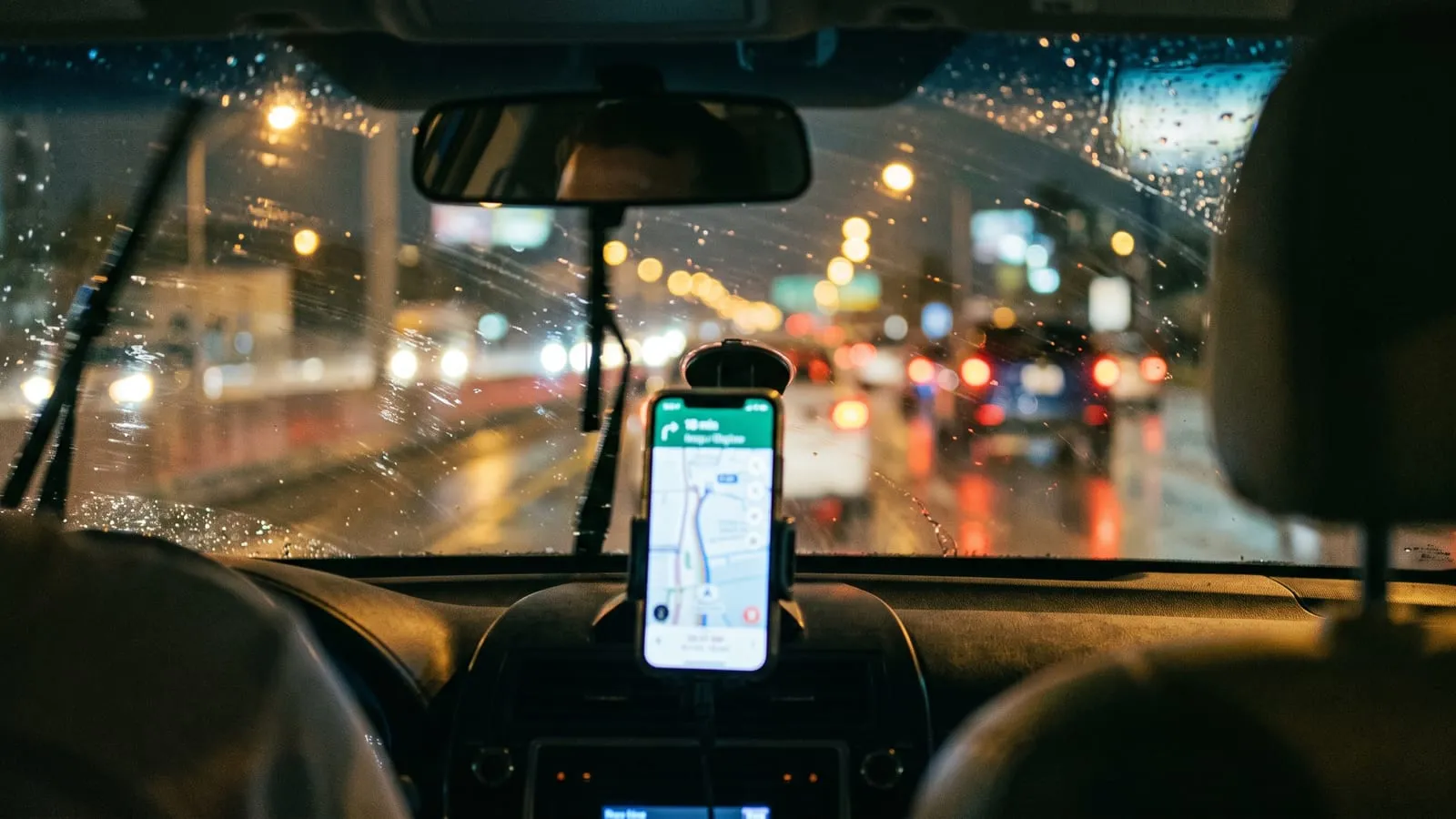
Palm Beach International Airport sends a steady line of rideshare cars out onto Southern Boulevard and I-95, and on weekend nights downtown West Palm Beach fills with them, dropping people at Clematis Street, The Square and the Kravis Center. When one of those trips ends in a crash, the injured person usually assumes the rideshare company’s insurance will handle everything. Sometimes it does. Sometimes it does not apply at all. Florida’s law on transportation network companies, Fla. Stat. § 627.748, makes the answer depend almost entirely on one fact: what the driver’s app was doing at the moment of impact.
What are the three app periods, and why do they matter?
Florida divides every rideshare driver’s time into three periods, and the required insurance is different in each.
| Driver’s status at the time of the crash | Minimum coverage required | Statute |
|---|---|---|
| App off, driving for personal reasons | Only the driver’s own personal auto policy | § 627.748 (no TNC requirement) |
| App on, waiting for a request | $50,000 per person / $100,000 per incident for bodily injury and death; $25,000 property damage; PIP; UM/UIM | § 627.748(7)(b) |
| Ride accepted, through drop-off | $1,000,000 primary liability; PIP; UM/UIM | § 627.748(7)(c) |
The statute says a prearranged ride starts when the driver accepts the request through the app and continues until the last rider has left the vehicle (§ 627.748(1)(b)). So a driver heading to pick you up at the PBIA rideshare area is already in the highest coverage period, even though you are not in the car yet.
The coverage can be provided by the driver, the company, or a combination. If the driver’s own coverage lapses or does not meet these requirements, the company’s insurance must step in from the first dollar of the claim and defend it (§ 627.748(7)(d)).
I was a passenger. What pays my medical bills first?
Florida’s no-fault rules still come first. If you own a car with a Florida policy, or live with a relative who does, that PIP coverage is usually the first source of payment for your medical bills and lost income, regardless of fault (Fla. Stat. § 627.736(4)(e)). If no household policy exists, the PIP on the rideshare vehicle applies, and § 627.748(7) requires that PIP during both the waiting and ride periods.
PIP pays 80 percent of reasonable medical bills and 60 percent of lost income, up to $10,000, and only if you receive initial treatment within 14 days (Fla. Stat. § 627.736(1)(a)). Visitors flying into PBIA from out of state should know that their home-state coverage may work differently, so the policies should be read rather than assumed.
Who pays for everything PIP does not cover?
That depends on who caused the crash.
If your rideshare driver was at fault during a ride, the $1 million liability coverage applies to your remaining medical bills, lost income and, if the injury meets Florida’s permanency threshold, pain and suffering (Fla. Stat. § 627.737(2)).
If another driver caused it, say someone ran the light at Australian Avenue and Okeechobee Boulevard, your claim goes against that driver’s bodily injury coverage. Florida does not require most drivers to carry it, so it may be small or missing. In that case, the uninsured and underinsured motorist coverage that § 627.748(7)(c) requires during a ride may cover the difference, along with any UM coverage on your own household policy.
If both drivers share the blame, fault is divided between them under Fla. Stat. § 768.81, and each insurer pays its share.
What if I was the rideshare driver?
Drivers face the same three periods from the other side. During a ride or while waiting, the coverage required by § 627.748(7) protects third parties and includes PIP and UM. Many personal auto policies exclude coverage while you are driving for hire, so a driver who crashed with the app off may be covered only by the personal policy, and a driver who crashed with it on may find the personal insurer pointing to the company. Getting the app records early settles that argument.
How is app status proven?
Do not rely on what anyone says at the scene. These records help:
- screenshots of the trip in your app, including the driver’s name, vehicle and trip times
- the emailed receipt, which shows pickup and drop-off times and the route
- the driver’s statements to the investigating officer, which may appear in the crash report
- the company’s own trip and telematics data, which a lawyer can request and later subpoena
Crash reports from West Palm Beach Police, PBSO or FHP can be requested through the Florida Crash Portal. Reports are limited to the parties, their lawyers and insurers, and certain others for the first 60 days (Fla. Stat. § 316.066).
What about a crash on the airport roads themselves?
PBIA is operated by Palm Beach County. A crash caused by another driver on the airport roadways is a normal negligence claim. If a roadway condition contributed, such as a missing sign or a defect in a county-maintained road, that part of the claim is against a government entity and follows the written-notice rules and caps in Fla. Stat. § 768.28.
How long do I have?
For crashes on or after March 24, 2023, the general deadline to file a negligence lawsuit is two years (Fla. Stat. § 95.11(5)(a)). Rideshare companies and their insurers move quickly after a crash, and trip data is easiest to secure early.
Call Wolfson & Leon in West Palm Beach
Wolfson & Leon has represented injured people since 1963. If you were hurt in or by an Uber or Lyft anywhere in Palm Beach County, call 561-782-1585 to set an appointment at our West Palm Beach office. The consultation is free, in English or Spanish. We work on a contingency fee, explain the percentage in writing before you sign, and advance the costs of the case.
Key facts
- During a prearranged ride, primary liability coverage of at least $1 million for death, bodily injury and property damage is required, along with PIP and uninsured/underinsured motorist coverage. Source: Fla. Stat. § 627.748(7)(c)
- When the driver is logged on but not on a prearranged ride, the minimum is $50,000 per person, $100,000 per incident and $25,000 property damage, plus PIP and UM. Source: Fla. Stat. § 627.748(7)(b)
- A prearranged ride begins when the driver accepts the request and ends when the last rider exits the vehicle. Source: Fla. Stat. § 627.748(1)(b)
- If the driver's insurance has lapsed or does not provide the required coverage, the company's insurance must provide it beginning with the first dollar of the claim. Source: Fla. Stat. § 627.748(7)(d)
Frequently asked questions
I was the passenger. Do I have to prove my Uber driver was at fault?
Not for PIP, which pays regardless of fault. For anything beyond PIP, you claim against whichever driver caused the crash: your rideshare driver, the other driver, or both. If the other driver had no or too little insurance, the uninsured motorist coverage required during a ride under § 627.748(7)(c) may apply.
The driver told me the app was off. Does that matter?
It matters a great deal, but the driver's word is not the last word. If the app was off, only the driver's personal policy applies. Trip receipts, app screenshots and the company's own data can confirm the status, so save everything from your phone.
My Lyft driver hit me while I was walking near Clematis Street. Who pays?
Your own or a household relative's PIP usually pays first. If the driver was logged on or carrying a passenger, the coverage required by § 627.748(7) may be available for the rest, depending on the app status at that moment.
This article describes Florida law in general terms for people in Palm Beach County. It is not legal advice about your situation, and reading it or contacting us does not create an attorney-client relationship with Wolfson & Leon. Results in past cases do not predict or promise the result in any other case.