
Florida's 51% rule: modified comparative negligence explained with Palm Beach County examples
For negligence lawsuits filed after March 24, 2023, Florida uses modified comparative negligence: an injured person's damages are reduced by their own percentage of fault, and a person found greater than 50 percent at fault for their own harm recovers nothing (Fla. Stat. § 768.81(6)). Each defendant pays only its own share of the damages, because judgment is entered according to each party's percentage of fault rather than on joint and several liability (Fla. Stat. § 768.81(3)). The 50 percent bar does not apply to medical negligence cases under chapter 766.
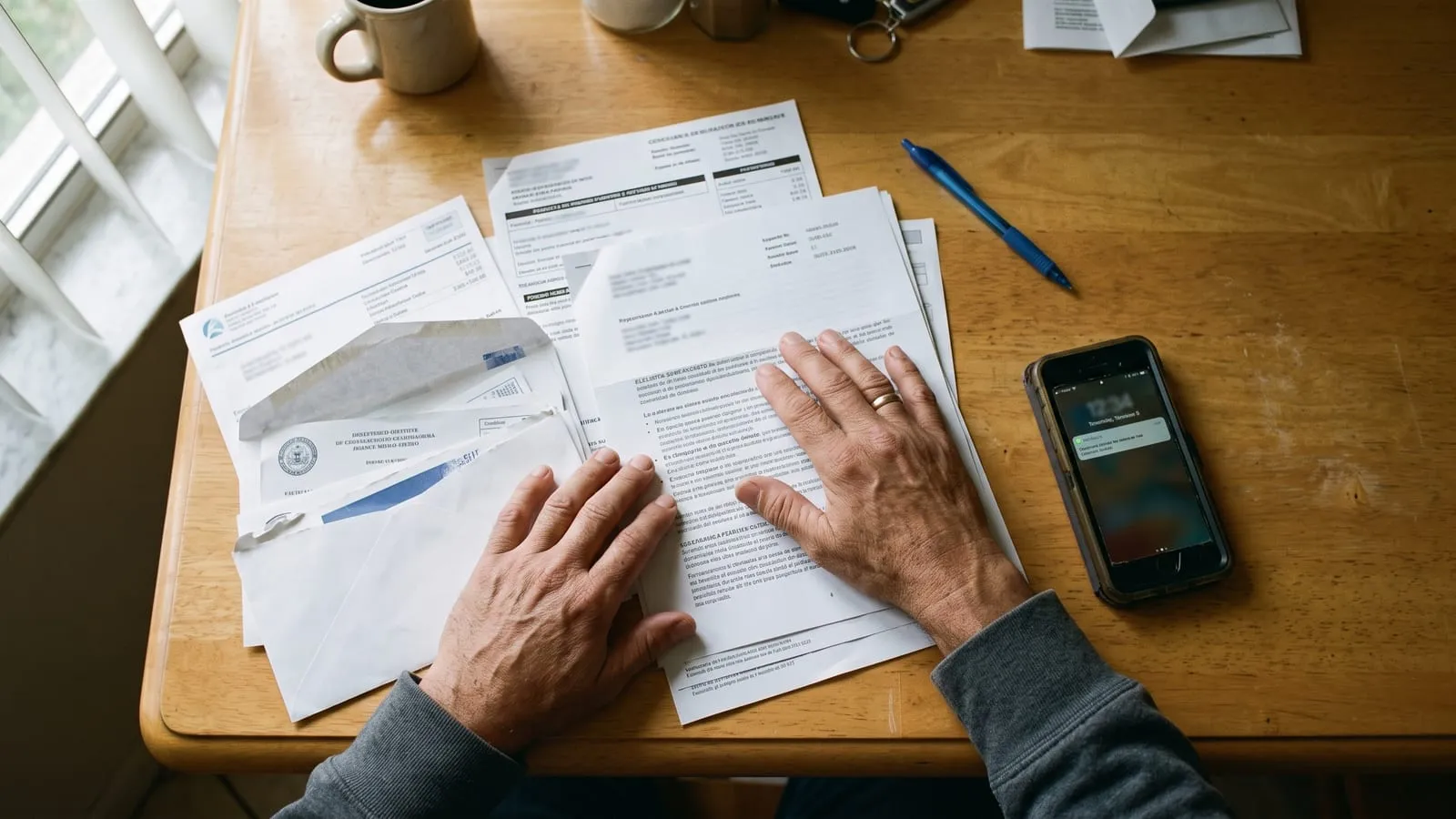
Almost every injury claim in Florida includes an argument about the injured person’s own conduct. You were going a little fast. You looked at your phone. You were not in the crosswalk. Until 2023, those arguments could reduce what you recovered but could never wipe it out. Now they can. Understanding how Florida’s modified comparative negligence rule works is the clearest way to see why insurers fight so hard over percentages, and why small facts matter.
What changed in 2023, and what does “greater than 50 percent” mean?
HB 837, the 2023 tort reform law, added subsection (6) to Florida’s comparative fault statute, and the act applies it to negligence lawsuits filed after March 24, 2023. It says that in a negligence action, any party found greater than 50 percent at fault for his or her own harm may not recover any damages (Fla. Stat. § 768.81(6)). Before that, Florida used pure comparative negligence, where even a person 90 percent at fault could recover 10 percent of their damages.
The line falls just above the halfway mark. At 50 percent, you still recover half. At 51 percent, you recover nothing. That is why the change is commonly called the 51 percent rule.
Below the bar, your recovery is reduced by your share. If a jury finds your total damages and assigns you 20 percent of the fault, you collect 80 percent of that amount. At 35 percent, you collect 65 percent.
The rule does not apply to everything. Section 768.81(6) expressly excludes personal injury and wrongful death actions arising from medical negligence under chapter 766.
How would the rule play out in real Palm Beach County situations?
The examples below are illustrations of how arguments tend to go, not predictions. A jury hears the evidence and can land in very different places.
| Situation | Arguments about the injured person’s fault | Why the percentage matters |
|---|---|---|
| A driver turning left from Okeechobee Boulevard onto Australian Avenue is hit by a car that ran a stale yellow light | The turning driver should have waited; the other driver says the light was still yellow | If the turning driver is found 40 percent at fault, recovery is reduced by 40 percent; at 55 percent, nothing |
| A pedestrian crosses Forest Hill Boulevard mid-block at night and is struck by a speeding driver | Pedestrians must yield outside crosswalks (Fla. Stat. § 316.130); the driver was going well over the limit | Speed and lighting evidence can keep the pedestrian’s share below 50 percent |
| A shopper slips on a spilled drink at a store near The Gardens Mall while reading a text | The spill was visible; the shopper was distracted | Video showing how long the spill was there can shift fault to the store |
| A driver not wearing a seat belt is rear-ended on I-95 near Palm Beach Lakes Boulevard | Failure to buckle up may be considered evidence of comparative negligence (Fla. Stat. § 316.614(10)) | The defense must connect the missing belt to the injuries, not just point it out |
| A motorcyclist rides between lanes of stopped traffic on Southern Boulevard and is struck by a car changing lanes | Riding between lanes of traffic is prohibited in Florida (Fla. Stat. § 316.209(3)) | The violation may weigh heavily, but the lane-changer’s failure to look still counts |
Do the defendants also get their own percentages?
Yes. Florida apportions fault among everyone whose negligence contributed, and judgment is entered against each party based on its own share, not on joint and several liability (Fla. Stat. § 768.81(3)). In a three-car crash on the Turnpike, a jury might assign 10 percent to you, 60 percent to one driver and 30 percent to another. Each defendant pays only its share of the damages. If one of them has no insurance, the others do not cover that portion.
Defendants also try to put blame on people who are not in the lawsuit, sometimes called nonparties, such as a driver who caused the chain reaction and left. The statute allows that only if the defendant pleads it and then proves the nonparty’s fault at trial. Your own percentage is still compared with everyone else’s combined. So the 51 percent question is whether your share is greater than half of all the fault in the case, not whether you were more careless than any single defendant.
What evidence moves the percentages?
Fault percentages are not assigned by formula. They come from the evidence, and the evidence that tends to matter most is the kind that disappears first:
- dash-cam and nearby business video, which often shows lane position, signals and speed better than any witness
- vehicle event data recorder downloads, which capture speed and braking in the seconds before a crash
- signal timing records for intersections along corridors like Okeechobee Boulevard and Military Trail
- the investigating officer’s measurements and photographs
- independent witnesses, especially people who were not in any of the vehicles
- in a fall case, the store’s video, inspection logs and prior incident records
Statements matter too. A casual remark at the scene, such as “I didn’t see him,” or a recorded statement given to the other side’s insurer can be quoted back to assign you a larger share. It is fine to be honest. It is not wise to guess.
How does the rule affect settlement offers?
Insurers estimate fault before they make an offer. An adjuster who believes you are at or near 50 percent may offer very little, betting that the bar will apply at trial. Pushing the evidence in the other direction, even by a few percentage points, can change the value of a claim more than any other single factor. That is why much of the early work in a Palm Beach County injury case is gathering the proof that keeps the injured person’s share where it belongs.
Have a lawyer look at the fault question
Wolfson & Leon has represented injured people since 1963. If you are worried that you share some of the blame, that is a reason to get advice, not a reason to give up. Call 561-782-1585 to set an appointment at our West Palm Beach office. Consultations are free and available in English or Spanish. We work on a contingency fee explained in writing before you sign, and the firm advances case costs.
Key facts
- Any party found greater than 50 percent at fault for his or her own harm may not recover any damages. Source: Fla. Stat. § 768.81(6)
- The greater-percentage-of-fault bar does not apply to personal injury or wrongful death actions arising from medical negligence under chapter 766. Source: Fla. Stat. § 768.81(6)
- Judgment is entered against each party on the basis of that party's percentage of fault, not on the doctrine of joint and several liability. Source: Fla. Stat. § 768.81(3)
- Failure to wear a seat belt may be considered as evidence of comparative negligence in a civil case. Source: Fla. Stat. § 316.614(10)
Frequently asked questions
If I am exactly 50 percent at fault, can I still recover?
Yes. The bar applies only to a person found greater than 50 percent at fault. At exactly 50 percent, your damages are cut in half but not eliminated.
Does the 51% rule apply to my 2022 accident?
It may. HB 837 says its changes apply to causes of action filed after March 24, 2023 unless the act provides otherwise, so the filing date, not the accident date, is generally what counts for this rule. A lawsuit filed before that date was generally governed by pure comparative negligence. Check the dates for your own case.
Who decides the percentages?
If the case goes to trial, the jury assigns percentages on the verdict form after hearing the evidence. Before that, insurance adjusters estimate them, and those estimates shape settlement offers, which is why fault evidence matters from the start.
This article describes Florida law in general terms for people in Palm Beach County. It is not legal advice about your situation, and reading it or contacting us does not create an attorney-client relationship with Wolfson & Leon. Results in past cases do not predict or promise the result in any other case.
 Personal injury
How much does a West Palm Beach personal injury lawyer cost? Contingency fees explained
Personal injury lawyers in West Palm Beach typically work on a contingency fee, a percentage of the recovery set out in a written contract. Rule…
Personal injury Florida's two-year deadline for injury lawsuits after HB 837: what Palm Beach County residents need to know
For injuries caused by negligence on or after March 24, 2023, Florida generally allows two years from the date of the injury to file a lawsuit (Fla.…
Personal injury Brightline and rail-crossing crashes in Palm Beach County: what injured drivers and pedestrians should know
Yes, a person hurt at a rail crossing can bring a negligence claim against a railroad, a crossing owner or a driver whose carelessness caused the…